Finding Your Strength Again: Trauma-Informed Kickboxing Comes to Spotswood
Mind in Mind Psychology is partnering with Conscious Combat Club to bring an 8-week trauma-informed kickboxing course to our Spotswood clinic.
If you've lived through trauma, you may know the feeling of your body not quite being your own. Your heart races when nothing seems wrong. You go numb in moments that should feel ordinary. You second-guess your "no", or you can't find it at all.
In our therapy rooms we see every day that trauma is held in the body as well as the mind. Talking helps, and for many people it's essential. But sometimes healing also needs to happen through movement: by feeling strong, grounded and in control in your body, often for the first time in a long time.
That's why we're delighted to welcome Conscious Combat Club to Mind in Mind Psychology for a trauma-informed kickboxing course for women and gender-diverse people in Melbourne's west.
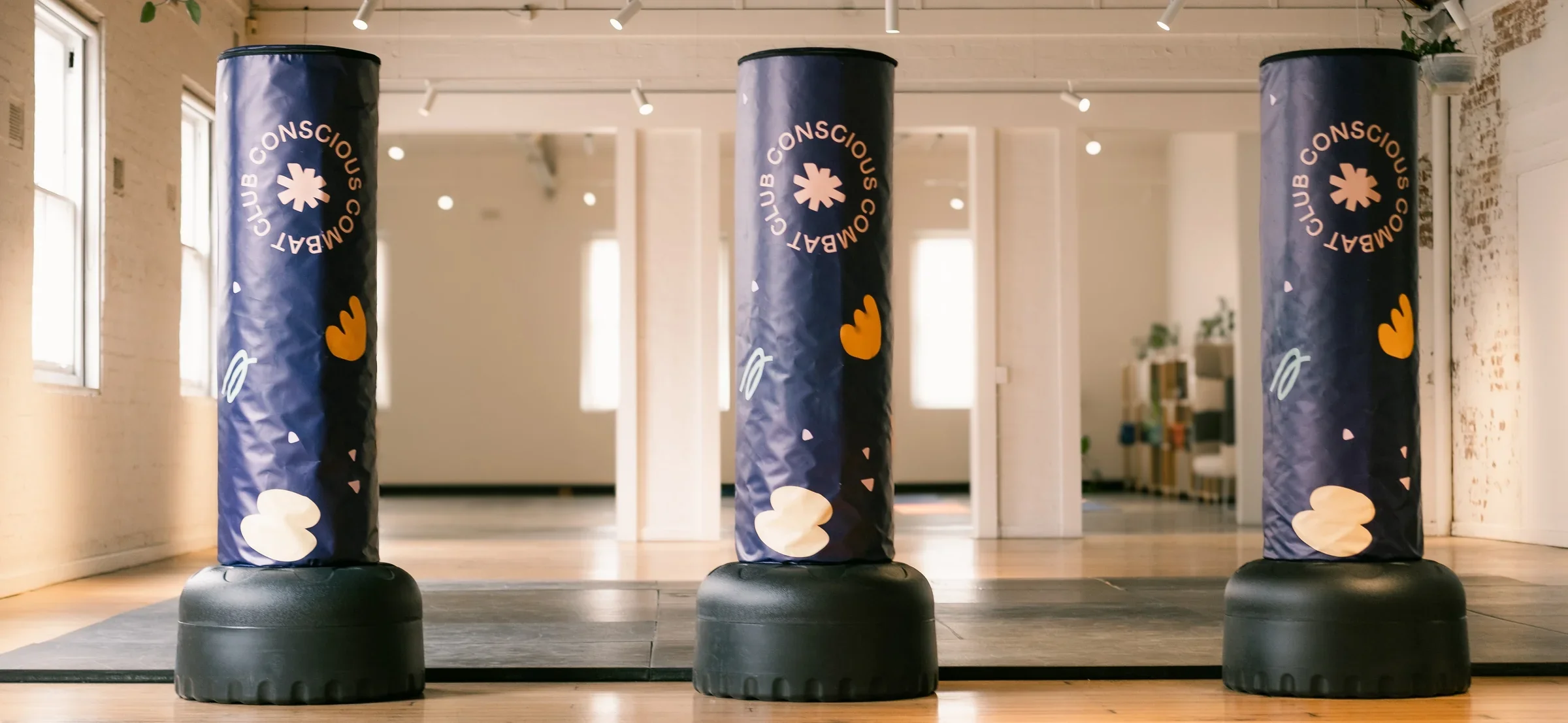
This is no ordinary combat class
Forget what you might picture when you think of a fight gym: dim lighting, loud music, an instructor shouting at you to push harder. Conscious Combat Club was built as the opposite of that.
Classes run in a bright, calm space. Nobody pushes you past your limits or yells encouragement at you. Instead, instructors offer invitations, not demands. You decide how you take part, when you rest, and what feels right for your body on the day. Your boundaries are respected and your choices matter.
The program is evidence-based, draws on lived experience, and is guided by five principles: safety, trust, support, collaboration and respect.
Understanding your "window of tolerance"
At the heart of trauma-informed kickboxing is an idea we use often in therapy: the window of tolerance.
Your window of tolerance is the zone where you can think clearly, weigh up information and respond rather than react. Everyone leaves it sometimes. When we move above it, we're in hyperarousal: anxious, agitated, or so upset that being told to "calm down" only makes things worse. When we drop below it, we're in hypoarousal: frozen, flat, disconnected or numb.
Trauma can shrink this window. Things that never used to bother you can suddenly send your nervous system into overdrive. For people who experienced trauma in childhood, the window may have been narrow for as long as they can remember.
The good news is that your window can grow. Three things help:
• spending time near its edges without being pushed outside them
• learning to notice the early body signals that you're about to leave it
• building reliable tools to bring yourself back
Trauma-informed kickboxing is designed to practise all three.

Trauma-informed kickboxing is designed to practise all three.
How kickboxing helps you heal
Choice keeps you in your window. When you have real control over how you take part, you can pause or adjust before your nervous system becomes overwhelmed. Many trauma survivors have had choice taken away from them. Getting it back, class after class, matters a great deal.
You reconnect with your body. The ability to sense what's happening inside your body is called interoception. Trauma, and our screen-heavy modern lives, can dull it. In class you'll be invited to notice small sensations, such as your shoulder tiring as you punch. With practice, you get better at recognising the physical signs that you're heading out of your window, which means you can act sooner.
You practise regulation under real stress. Most of us have tried breathing exercises or body scans. They tend to work well when we're already calm and fail us when fight-or-flight takes over. Conscious Combat Club uses a technique called "Pound & Ground". You work hard for a round, raising your heart rate, then practise bringing it back down before the next round. By rehearsing regulation while your body is activated, you make it more likely you'll reach for those skills when you're triggered in everyday life.
You rebuild boundaries and confidence. The course goes beyond technique to focus on key parts of post-traumatic growth: setting boundaries, connecting with your body, and regulating your emotions. There's something powerful about learning to throw a strong, clean punch, and knowing you choose where and when you use your strength.

What the 8-week course involves
Step 1: A private initial consultation. Before your first class you'll meet with a facilitator for a 30-minute chat by video call or phone. They'll ask about your goals, any injuries or health conditions, and anything that might be triggering, so the space can be made as safe as possible for you. They'll also walk you through the program so there are no surprises on day one.
Step 2: Master the foundations. You'll join a small group of beginners, no more than 10 people, at Mind in Mind Psychology. Over eight weeks you'll learn:
• four punches: jab, cross, hook and uppercut
• three kicks: knee, teep and roundhouse
• the "Pound & Ground" regulation practice
• boundary-setting skills and body awareness
Step 3: Join the club. When you finish, you're welcome to continue with Conscious Combat Club's all-levels classes at their Collingwood studio. If Collingwood isn't practical, they can help you find a suitable local gym.
The details
• Where: Mind in Mind Psychology, 204b Hall Street, Spotswood VIC 3015
• Who: Women and gender-diverse adults (18+). Classes are run by women, for women.
• Cost: $320 for the full 8 weeks, including your own set of handwraps
• Equipment: All gloves and pads provided
• Referral: Not needed. Your initial consultation will confirm the group is a good fit for you.
• Experience: None required. This course is for complete beginners.
Working alongside therapy
Trauma-informed kickboxing isn't a replacement for psychological treatment, and it doesn't need to be.
For many people it's a powerful complement to therapy: a place to practise, in the body, the skills of safety, regulation and boundaries that we build in the therapy room. If you're a current Mind in Mind client and wondering whether it's right for you, talk it through with your psychologist.
Ready to take the first step?
You don't need to be fit, confident or "ready". You just need to be curious about what it might feel like to feel strong in your body again.
Not quite ready? That's okay too. You can request more information and go at your own pace. Choice, after all, is the whole point.
Written by Dr Jennifer Menon, Clinical Psychologist, Director of Mind in Mind Psychology