EMDR Therapy: What It Is, How It Works, and Common Myths Debunked

What Is EMDR Therapy?
EMDR stands for Eye Movement Desensitization and Reprocessing. It's a structured, evidence-based form of therapy originally developed to help people process traumatic memories. Unlike traditional talk therapy, EMDR doesn't require you to describe a traumatic event in detail. Instead, it uses a technique called bilateral stimulation, typically guided eye movements, but sometimes taps or sounds, while you briefly focus on a distressing memory, helping your brain "reprocess" it so it no longer feels as overwhelming.
EMDR is recognized as an effective treatment by organisations including the World Health Organization (WHO), the Australian Psychological Society (APS), and Phoenix Australia - Centre for Posttraumatic Mental Health. It is also recognised and approved as a psychological intervention under Australia’s Better Access Medicare Initiative.
How Does EMDR Work?
EMDR follows a structured 8-phase protocol:
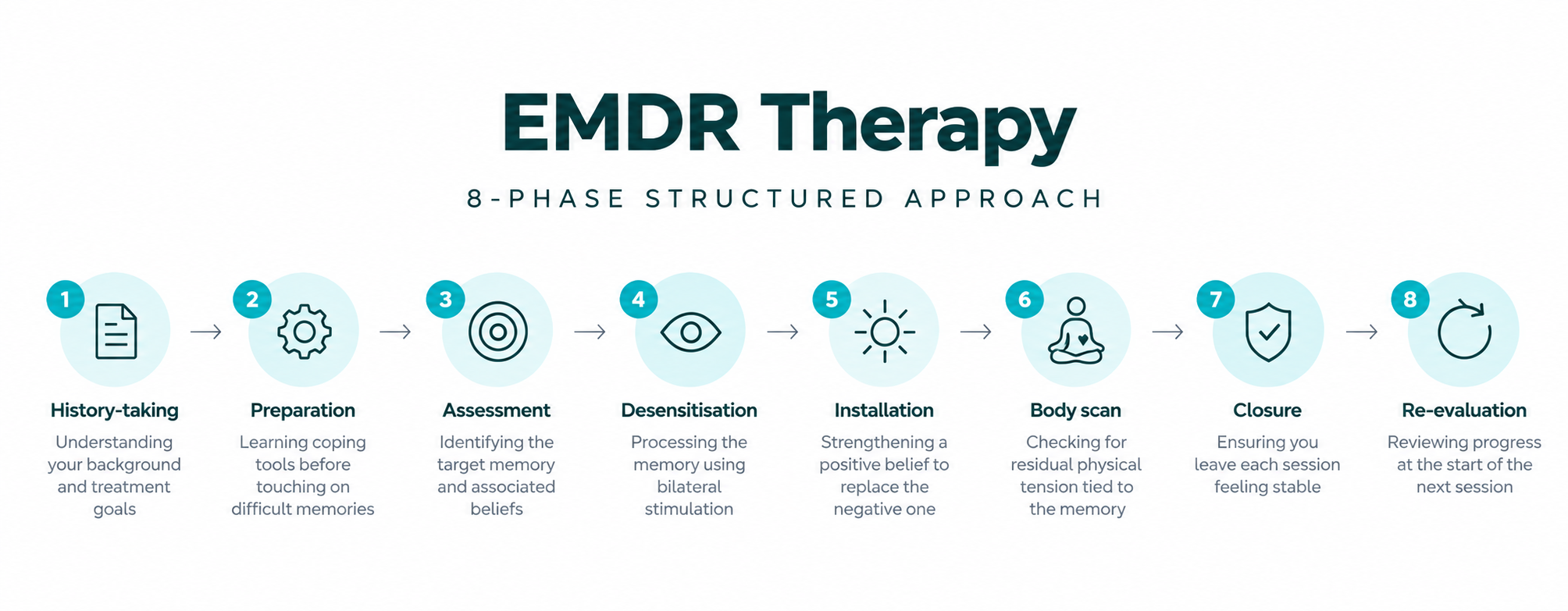
1. History-taking — understanding your background and treatment goals
2. Preparation — learning coping tools before touching on difficult memories
3. Assessment — identifying the target memory and associated beliefs
4. Desensitisation — processing the memory using bilateral stimulation
5. Installation — strengthening a positive belief to replace the negative one
6. Body scan — checking for residual physical tension tied to the memory
7. Closure — ensuring you leave each session feeling stable
8. Re-evaluation — reviewing progress at the start of the next session
Sessions are typically 60–90 minutes, and the number of sessions needed varies depending on the person and the complexity of what's being addressed.
What Can EMDR Help With?
While EMDR was originally developed for PTSD, research and clinical use have expanded its applications to include:
Trauma and PTSD (single-incident or complex/childhood trauma)
Anxiety and panic disorders
Phobias
Grief and loss
Depression linked to distressing life events
Low self-esteem rooted in past experiences
Performance anxiety
Chronic pain with a psychological component
EMDR is also not a one-size fits all approach. It can be modified and adjusted to suit your individual needs and preferences. For example, modifications can be made for Neurodiverse individuals based on sensory preferences, preferred ways of communicating and learning needs.
Note: EMDR isn't the right fit for everyone or every concern — a qualified therapist can help determine if it's appropriate for you.
Myth-Busting: Common Misconceptions About EMDR
Myth #1: "You have to relive the trauma in detail."
Reality: You don't need to describe the event out loud. EMDR works by briefly holding the memory in mind while your brain does the processing. It's often described as less verbally intensive than traditional talk therapy.
Myth #2: "It's hypnosis."
Reality: EMDR is not hypnosis. You remain fully alert and in control throughout the session, and you can pause or stop at any time.
Myth #3: "It only works for major trauma like combat or assault."
Reality: EMDR is also used for other distressing experiences. For example, a difficult breakup, a car accident, bullying, or medical trauma, that still affect how someone thinks, feels, or reacts today.
Myth #4: "The eye movements are just a gimmick."
Reality: While researchers are still studying exactly why bilateral stimulation helps, multiple clinical trials show EMDR is effective at reducing trauma symptoms, and brain imaging studies show measurable changes in how memories are stored after treatment.
Myth #5: "Results happen in one session."
Reality: Some people notice a shift quickly, but EMDR is typically done over multiple sessions, especially for complex or long-standing trauma. Healing isn't instant, but it can be faster than some other trauma therapies.
Myth #6: "It's not backed by real research."
Reality: EMDR has been studied in numerous randomized controlled trials and is included in trauma treatment guidelines by major health organisations worldwide.

EMDR at Mind in Mind Psychology
At Mind in Mind Psychology, our trained EMDR therapists offer this approach in a safe, supportive environment tailored to your pace and needs. Whether you're working through a specific traumatic event or long-standing patterns that feel hard to shake, EMDR may help you process the past so it has less hold on your present.
Ready to learn more? Contact our friendly admin team to find out if EMDR is right for you, and they will help match you to the best suited clinician.
Frequently Asked Questions
-
Some sessions can bring up difficult emotions, but therapists use preparation techniques to help you feel grounded and safe throughout. They will also help you to feel grounded and calm towards the end of the session, so that you feel able to leave the session without heightened distress.
-
This varies widely. Some people see change in a handful of sessions, while more complex trauma may take longer. Your therapist will discuss a personalised plan.
-
Yes, many therapists offer EMDR via telehealth using adapted bilateral stimulation techniques, though some prefer in-person sessions, especially initially.
-
Yes, EMDR can be used across the lifespan with children through to adults. The techniques and styles are modified according to the developmental stage and needs of the individual.
Author: Martina (Tina) Rakovic - Psychologist, Clinical Team Lead