Navigating the Loss of the Life We Planned: Adapting to Chronic Health Diagnoses

We all carry assumptions about our future. We typically assume we will have the health and vitality to pursue our ambitions. When those expectations are disrupted, the resulting loss can feel profound.
Many of us find ourselves grieving not only what has changed, but the future we had imagined for ourselves. When we think about grief, we often think about losing someone we love. Less often, we talk about the grief that can emerge when our lives don't unfold in the way we expected.
This can happen following a chronic illness diagnosis, an injury, infertility, burnout, or another significant life event. Sometimes the loss is obvious. Other times, it is harder for us to define.
We may feel that the life we had planned is no longer available in the way we once imagined. Yet because there is no socially recognised script for this type of loss, we often struggle to make sense of what we are experiencing.
Rather than recognising grief, we may tell ourselves we should simply move on, be more positive, or try harder to accept our circumstances.
Beyond Medical Management: The Identity Shift
While understanding the emotional weight of this loss is vital, much of our initial focus during significant life changes is often restricted to practical survival.
How will treatment work?
Can I keep working?
What will daily life look like now?
These are important questions. However, they do not always capture the full emotional impact of what we have experienced.
Research on chronic illness adjustment consistently identifies changes in identity as a significant challenge. Sociologist Michael Bury described this as biographical disruption—the way illness can interrupt assumptions about who we are and how our lives will unfold.
Roles that once felt important may become difficult to maintain. Activities that provided meaning, competence, connection, or enjoyment may no longer be possible in the same way. We may find ourselves questioning who we are when the future we had planned is no longer available.
It is common to hear thoughts such as:
"I don't feel like myself anymore."
"I don't know who I am if I can't do the things I used to do."
"I thought my life would look different by now."
These experiences are not signs that we are coping poorly. They are often part of the process of adapting to a reality that we never anticipated.
Navigating the Cycle of Comparison
When our sense of self is disrupted, it is natural to look backward, yet this search for our former selves is often what makes the adjustment feel so non-linear and frustrating.
Many of us continue to compare our current circumstances with the life we expected to have. This is understandable. When something important has been lost, our attention is naturally drawn towards what used to be.
However, constant comparison can also become a source of suffering.
We often continue to hold ourselves to expectations that were developed under very different circumstances. We may expect the same productivity, energy, or capacity despite operating with a different set of resources.
When we cannot meet these expectations, self-criticism often follows.
Over time, this can contribute to shame, hopelessness, and emotional exhaustion.
Building Resilience Through Self-Compassion

Breaking the cycle of self-criticism requires a shift in how we relate to our experiences. This involves moving away from harsh judgment toward a more supportive internal dialogue.
If we are hard on ourselves, we might tell ourselves we should be coping better. We may minimise our struggles because others have it worse, or push through exhaustion and judge ourselves when we cannot keep up.
While this response is common, research suggests it is rarely helpful.
Self-compassion has consistently been associated with greater psychological wellbeing and adjustment across a range of life challenges, including chronic illness, pain, disability, and significant stress.
Importantly, self-compassion is not about feeling sorry for ourselves or lowering our standards.
Rather, it involves recognising suffering when it is present and responding to ourselves with understanding rather than criticism.
This can be particularly challenging when health changes occur because many of us direct frustration towards our own bodies. We may feel angry, betrayed, disappointed, or resentful that our body is no longer allowing us to live in the way we had planned.
"Self-compassion does not require liking the situation or pretending it is okay."
Self-compassion does not require liking the situation or pretending it is okay.
It involves acknowledging that what is happening is genuinely difficult and responding accordingly.
For some of us, this means allowing ourselves to rest without guilt. For others, it means adjusting expectations, asking for support, or recognising that limitations are not personal failings.
While self-compassion cannot remove loss, it can reduce the additional suffering that comes from fighting ourselves while we are already struggling.
Reframing Acceptance: A Path Forward
A common misconception is that accepting a difficult reality means giving up.
In practice, acceptance is something quite different. Acceptance involves acknowledging reality as it currently exists, rather than directing ongoing energy towards wishing things were different. This does not mean abandoning treatment, goals, or hope. Rather, it allows us to focus our energy on what is within our control.
In Acceptance and Commitment Therapy (ACT), acceptance is viewed as one part of psychological flexibility—the ability to stay connected to the present moment and continue moving towards what matters, even in the presence of pain, uncertainty, or difficult emotions.
The goal is not to eliminate grief.
The goal is to make room for our grief while continuing to engage in a meaningful life.

Finding Meaning in New Territory
As we begin to accept our current reality, we can start to answer the deeper questions about purpose that often surface during times of upheaval.
If I can't do the things I planned to do, who am I?
If I can't live the life I imagined, what am I working towards?
What research on adaptation consistently shows is that we are often more capable of adjusting to life changes than we initially expect. While the loss remains real, many of us gradually find new ways of experiencing meaning, connection, and purpose.
This does not happen because the loss stops mattering.
It happens because humans are remarkably capable of adapting.
Over time, many of us reconnect with what matters most, even if the way we engage with those values looks different than it once did.
The goal is not to replace what has been lost.
The goal is to build a life that can hold both loss and meaning at the same time.
Key Takeaways
✓ Grief is a natural response to the loss of our imagined future.
✓ Shifts in identity and biographical disruption are expected components of our journey in adapting to change.
✓ Self-compassion helps us reduce secondary suffering caused by self-criticism during difficult times.
Moving Forward
Navigating a life that looks different than we imagined is a significant undertaking, but it is a journey you do not have to walk alone. There is hope in the process of adaptation, and even in the midst of change, a fulfilling life remains possible.
To begin moving forward, we invite you to start with small, gentle steps that honour your current capacity.
Seeking professional support can provide a safe, compassionate space to process your grief and rediscover your strengths.
If you feel ready to explore these tools further, please reach out to our team to discuss how we can support you in building a renewed sense of purpose and wellbeing.
Further Reading
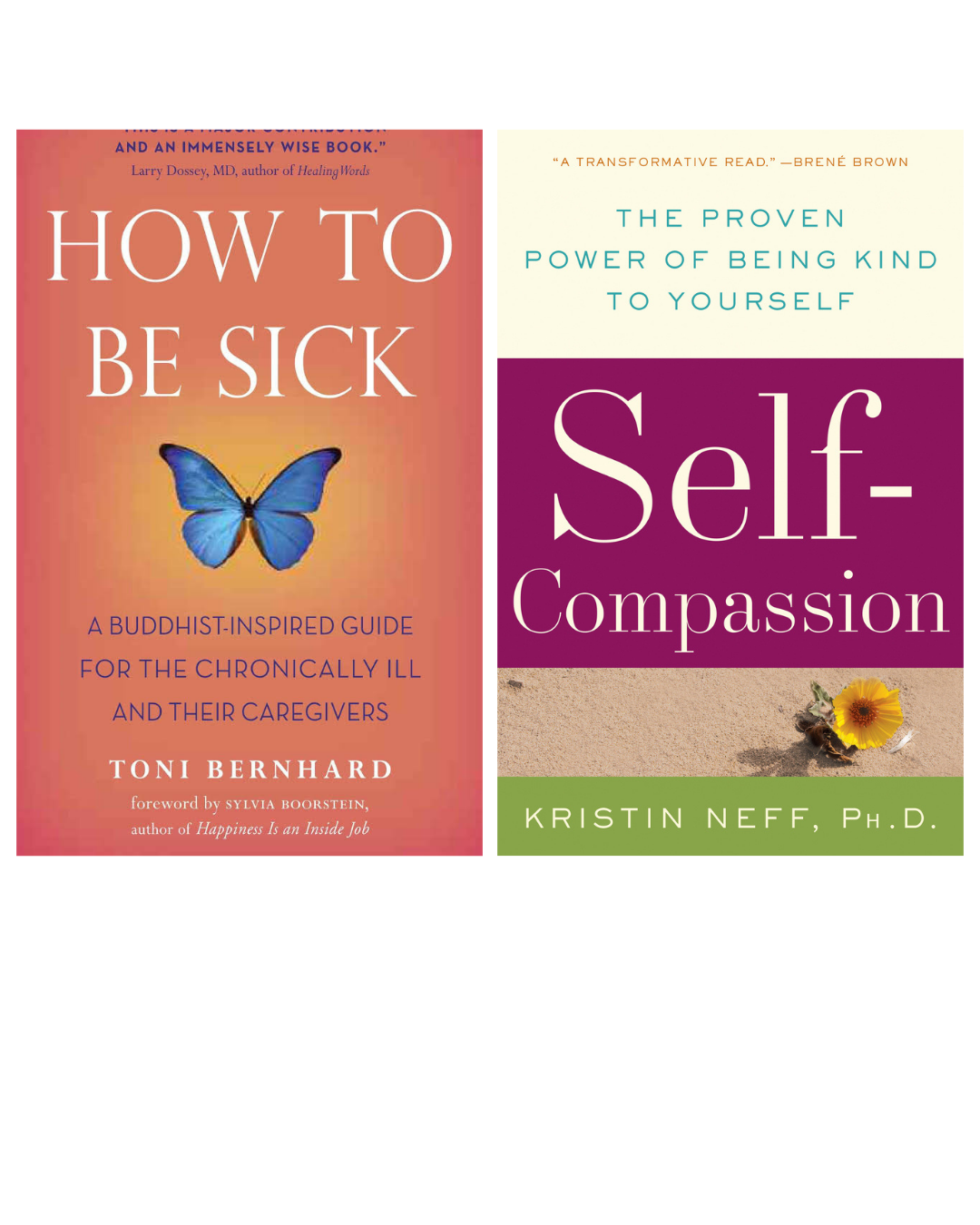
How to Be Sick by Toni Bernhard
Written from the perspective of someone living with chronic illness, this book explores how to navigate loss, uncertainty, and suffering while building a meaningful life within the realities of changing health.
Self-Compassion by Kristin Neff
An introduction to the science and practice of self-compassion, including practical strategies of how we can respond to suffering with greater understanding and less self-criticism.
Written by Alisha Johnson, Registered Psychologist